Why culture change is failing?

I attended the excellent 10th Annual Culture & Conduct event a week ago in London and saw some passionate and stimulating presentations and discussions. But it was Groundhog Day…
Today’s challenges are the same as they have been for the last 10 years. We are still seeing corporate scandals, poor consumer outcomes, failures in governance, lack of transparency of the truth, fear of speaking up, and at the worse end, bullying and sexual harassment. Many people are just miserable marking time in their jobs. So have we made any progress?
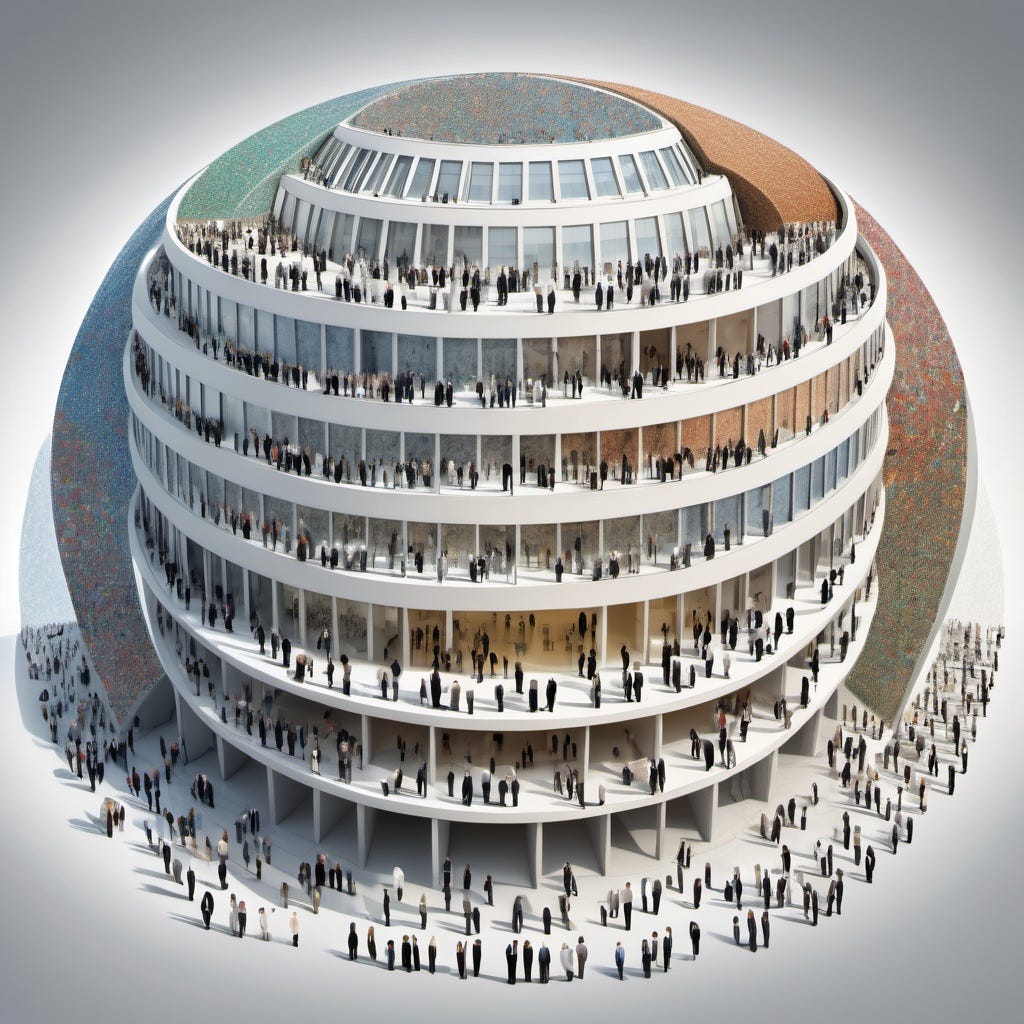
There are some great organisations, great leaders with passionate and driven teams creating healthy high-performance (and even fun) environments. In most cases this is where the organisation is customer + employee centric and financial performance is the outcome of aligning around the right purpose, whilst continuous reinforcing a supportive environment through the right behaviours. It’s that simple.
Many of us have been fortunate to either witness this or help create it at some point… but alas it doesn’t always last. Changes in the Chair or Exec, pressures on the organisation, reprioritising what’s valued, a shift to a short-term focus or the strategy that changes every 2-3 years with new leaders who feel the answer is a new plan and approach.
Then there are plenty of organisation who pretend to the world (and themselves) that they are great businesses. Avoiding the true situation in terms of leadership behaviours, ignoring what life is really like for customers and employees, even supressing those who trying to flag the issues or try to drive improvements. Everyone caught in fear and feeling helpless waiting for some brave intervention to sort it out.
We use “culture” as a catch all for the good, the bad and the horrifically ugly. Terms like “toxic culture”, “blame culture”, and “speak up culture” are used commonly. Regulators have been slowly integrating culture into their expectations. The FCA first did this in July 2007. These are the right steps, but while we blame culture as an intangible entity, a powerful force that controls a company, we avoid seeking to understand what it is or hold those who shape, transmit and reinforce the wrong mindset and behaviours to account. These aren’t just individuals in a company but include shareholders, regulators or even governments who don’t consider the unintended consequences of policies or actions.
So, is organisational culture real? Yes. But it’s not a singular, homogeneous thing, it’s a complex, evolving human system. Many readers will no doubt stop reading at this point or scroll down to find the key takeaways from this article, because this now sounds overly complicated. Alas we have been fed reductionist ideas, solutions and diagnostics from business schools and advisors that play to our fear of complexity, give us the illusion of sense-making and create a promise of control over the future[1]. My least favourite term being “culture drivers” as if pulling a few handles will solve an issue.
In 2014, I sat down with my FCA Supervisor at the time as part of leading a bank’s Customer, Conduct and Culture Programme. This high-profile, large-scale programme, reported to the Board and covered all business units, had been initiated 6 months earlier. The Supervisor asked to see our culture plan, as most other major banks had completed and shared their plans for the next 2 years. I refused and explained that the central team and each of the business areas were hard at work on it. I was challenged again and told that this was an important deliverable which was needed asap to enable the regulator to understand how seriously the bank was taking this and how quickly change could happen. At this point I bust out laughing (which is not the done thing in these meetings) and explained the breadth and depth of the analysis we had kicked off, all the functions we had aligned and engaged in the work (which was not a simple action) and how we were seeking to understand the work carried out in the past and already underway. The Supervisor agreed it made sense to start to understand the system, think about the behaviours we were seeing across all levels and the root-causes of them, amplify what was already working, develop a connection between a number of behaviours and their positive or negative impact with performance and so on, after all weren’t we trying to build a better business for ever, not just take a sticky-plaster approach? The meeting ended with the Supervisor thanking us and suggesting they were going to review the other banks plans given they can’t possibly understand the culture of their organisations and have even less understanding of what activities would be in place in a year or so’s time! And yet this is not unusual in any organisation.
During this period, we engaged thousands of people in breakthrough change initiatives, we read all the culture literature we could find and interviewed / worked with some amazing people (for example Roger Steare and Qamar Zaman whilst working at the FSCB) who were all looking at facets of understand and measuring organisational culture. We were very lucky, and we achieved great outcomes at the time, but not everyone takes this approach.
So hopefully you can see the problem starting to take shape and why 10 years on organisations are still running to stand still? At its simplest level:
1. We’ve failed to define culture
There’s a bias for oversimplification when we are trying to understand a complex system and in parallel, we are not challenging the obvious poor behaviour or those carrying it out around us. Abuse of hierarchy and power are too often the primary factor. We allow workplaces to run feudal systems, which we’d never accept in wider society. It’s therefore in the “too hard” box for some companies, whist making “culture” a useful label to deflect the blame. And here lies the challenge, most people come to work to do a good job and be kind to others, so what’s impacting that, what’s creating the environment for lacking trust, not working as collaborative teams, creating fear of losing your job, bending integrity out of shape, all through to enabling and accepting misconduct?
We must stop seeking a quick fix, using rapid cultural diagnostics as they are a joke and lead to tactical actions that don’t face into the truth or fix systemic issues. We must be curious and seek to understand and learn. Try to develop a broader view of the system in play at all levels (as explained well by Seeing Systems by Barry Oshry[2]). Believe that most people are good and being impacted by the reinforcement systems and environment we have placed around them. I’m always equally shocked by the reliance on annual or bi-annual employee surveys, that are mostly used to give a warm feeling that leaders are doing a good job, instead of seeking honest, real-time feedback direct to the leadership[3]. This links to the development of ineffective “cultural MI”. Guess what… all MI is cultural, but it’s only contextualised when we seek to understand how people feel and look at the behaviours around us.
2. We’ve failed to take ownership
We are tolerating poor behaviours because we don’t really want to change, (i.e. we are willing to ignore today’s truth, as we don’t believe there’s a better way, or we don’t see an easy path forwards to address it). That seems harsh when we look at very large complex companies or even government departments. But if our lives depended on it, we’d be more radical, our minds would be open to change, we’d be willing to address some painful truths, we’d explore all the options and we’d seek the right solution, whatever the pain. And the great news is the answer to the biggest issues in organisations will already be known and there will be pockets of positive, inclusive performance, just not joined up into a coherent picture to then work on solving. The people already know what’s wrong.
There’s a good reason why the Board and Executive are seen as the custodians of culture, because they are. Alas old-school business hierarchies and command and control management isn’t a great tool for inspiring and enabling change, as it’s often why a company has a problem. And yes, this is magnified in companies under pressure from shareholders for results, where doing the right thing and investing in a long-term improvement plan is seen as foolhardy for leaders who need to deliver results within their short tenure. Leaders must now look to themselves and not blame the culture… It’s your role to juggle the challenge. There are plenty of tools and approaches to drive behavioural improvements linked to performance, but they don’t reside in the traditional leadership playbook. I’m not saying Execs are out to create the wrong environment or incite the wrong behaviours… but leaders are the easiest element of the organisational system to unlock new understanding and new levels of positive change. Hopefully we’ve all worked for great leaders who “dare and care”, who don’t have a fixed mindset and want to bring the organisation with them, empower them and achieve great things (not just a short-term share price lift).
3. We’ve failed to learn and keep learning
I’ve led four complex culture programmes and numerous large-scale transformation programmes. I’ve worked with outstanding leaders, experts in ethics, data scientists, behavioural economists and change practitioners, sort to understand critical system thinking[4] and continuously exploring and experimenting with new ideas and solutions. The more I learn the more I realise we shouldn’t jump to answers or seek short-term fixes, yet know that facilitating the right mindset shift upfront and triggering interventions can unlock new opportunities very quickly.
Organisations need to do the same. Yet I’ve seen numerous culture programmes reinventing the wheel years after previous ground-breaking work without leveraging the critical insights, or poor employee engagement scores resulting in a rapid 10 point improvement plans from leaders that was then imposed on employees without their consideration, culture-related reports swiftly buried, internal audit reports go through rounds of editing to water down any real value, witnessed the use of NDAs and personally been locked in an office by an unsavoury COO for not sharing the names of the whistle blowers who asked to remain anonymous.
It’s time to embrace being human, accept we behaviour differently in stressful environments, seek to understand the truth and lead the change. It’s also time to remove that toxic, self-interested person ( despite their revenue numbers), as the business will actually do better without them, your clients and employees may even endorse the move.
A great leader I know just throws fearless energy, passion and total integrity into his company and always gets results the right way. Those who’ve gamed the system in the past or have been hiding behind poor capabilities and behaviours are soon exposed and leave. He taught me a critical lesson about learning by doing, not just trying to design the perfect solution.
So what’s the answer?
Well it’s not found in reading a single article, or in one book, or from a traditional consulting firm or finding a framework to execute tomorrow. So at risk of over simplifying the problem what’s the solution? There is some simple logic to follow to develop an approach to suit your business:
1. Agree as leaders you’ve had enough of the status quo
As leaders you need to align and engage together for real change. It takes continued effort and bravery to face into a system and then shift it, as like bad habits they need to be broken with something better. Employees need to know and feel things are different and the value-model of old and what was tolerated in the past no longer works. The new ways of working and achievements need to be celebrated and reinforced so everyone feels safe to do good, to collaborate, to openly challenge and to do great work.
Importantly it isn’t a job for HR or Compliance or a transformation leader to own. Everyone helped create the system and everyone needs to do their bit to fix it together.
2. Work top-down and bottom-up
The leadership teams I have worked with have required sensitive help and support to understand and take on the challenge. Sponsorship by the Chair or CEO is critical, but everyone must be open to learn and adapt. Establishing the scope and approach to understand the scale of the problems, define the outcomes and develop the opportunities rests with the leadership. The most critical step is to establish a safe environment for the rest of the organisation to thrive and be empowered to drive the change, as they will be excited, motivated and ready, if they believe it’s really going to happen this time (as I expect this won’t be the first time they’ve had hope and it’s been dashed).
This is about a structured approach, but one with experimenting, learning, monitoring, adapting and communicating continuously, not a fixed Target Operating Model or off-the-shelf Culture Map to deliver in 3 years’ time.
In my experience the organisation rises to the challenge and will achieve amazing results very quickly whilst shining a light on the harder more complex issues that are more emotional and political to address. Governance and control need to be adapted to support innovation and the flow of new ideas, as the old system will initially fight back to form barriers and constraints to performance.
3. Treat as the most strategic and complementary initiative in the company
We’ve seen the impact of scandals on organisations through conduct issues. Oxfam, The Church of England, Boeing, Carillion etc. that flag culture as a cause. Conduct, behaviours and the system that enables them is a Principal Risk in many high-profile organisations and will continue to be. It’s also a regulatory imperative for listed companies and more importantly a source of employee misery and underperformance in many organisations. How more strategic does this need to be to be at the top of the list for Boards and Execs to understand and address?
What’s key to success is to avoid the bare minimum, tick-box approach and seek to understand the health of the human system in your business and see the opportunities that can be created by better understanding it, amplifying good practice and removing the problems and barriers.
All change and improvement activities in a company rely on people and so this shouldn’t be a stand-alone initiative (as is unfortunately the case in many organisations) but an enabler and accelerator for innovation, performance and growth. That’s not saying there aren’t specific organisational streams of activity around remuneration, KPIs, roles and responsibilities, empowerment, trust building, communications etc.
In conclusion, “culture change” will fail if you are looking at it in the wrong way and seeking the wrong outcomes. It requires an emergent approach as complex but can be started very quickly and adapted along the way with the right focus, support and intent. It is all about the Board and Executive to lead this and create the right environment for success and a healthy organisation.
We must stop blaming culture and using it as an excuse for scandals and poor business performance. It’s poor leadership, abuses of power, a lack of bravery in tackling known issues and seeking a quick fix, often fed by poor advice.
For more information or help visit www.disruptionspace.co
[1] Magnetic Nonsense by Paul D. Sweeney, 2024
[2] Seeing Systems, Unlocking the Mysteries of Organizational Life, by Barry Oshry, 2007
[3] www.Harkn.com
[4] Critical System Thinking and the Management of Complexity by Michael C Jackson 2019